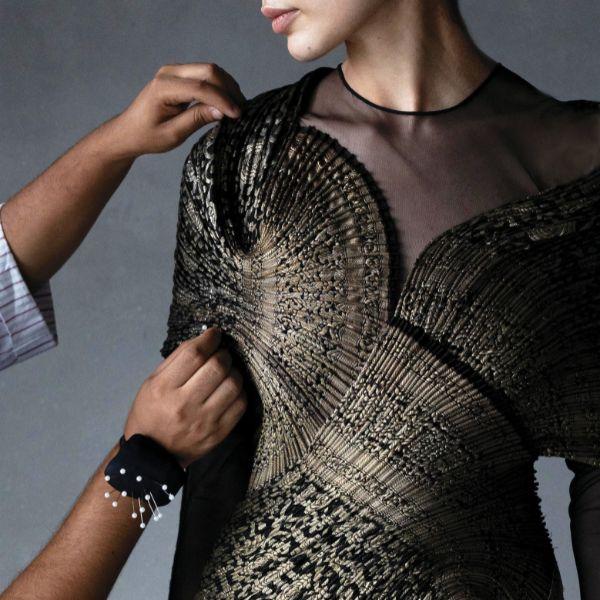
Amit Aggarwal - The architect of futuristic style
He revives textiles to craft shape-shifting silhouettes — rigid yet fluid, structured yet mouldable. At a time when couture seemingly searches for relevance, Brides Today steps inside Amit Aggarwal’s metamorphosing universe to understand how he bends material, memory, and craftsmanship into garments that challenge what couture can be.


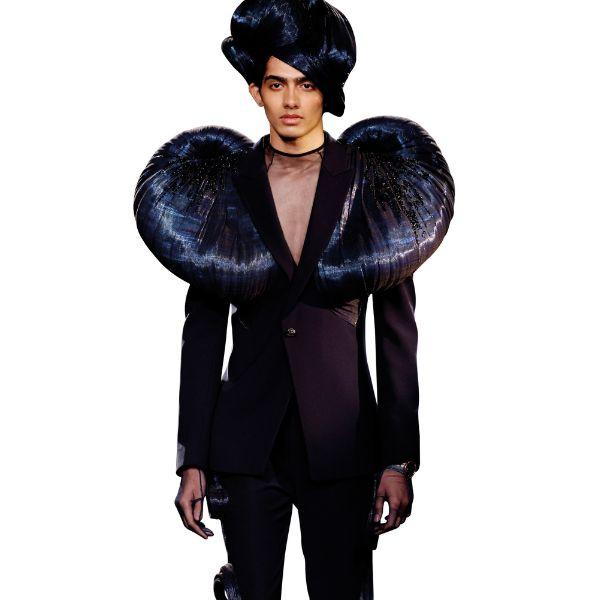
The quiet hum is familiar. Inside Amit Aggarwal’s studio—part workshop, part laboratory, part cocoon—the grammar of couture is being rewritten, rewired, and reimagined in real time. Anyone who has spent even a moment with Amit’s gravity-defying creations knows this intimately: the day-to-day laws of physics simply don’t apply here. Polymer ribbons snake like smoke. Wire coils ripple like liquid metal. Fabrics hover, glisten, swell, and retreat. The human body becomes a landscape, a garment, an emotion.
But for Amit, one of India’s most forward-facing couturiers, the starting point is never material or spectacle. It’s always the person. “The human always comes first,” he tells us. “Structure only enters to support the inner world.”
This inner world—of memories, of emotional sediment, of private tectonic shifts—is the engine behind this couturier’s work. It’s the reason his clothes feel alive; why they appear like creatures swallowing themselves whole; and why no two pieces, even when sculpted from similar ribbed polymers or repurposed Banarasi textiles, carry the same emotional weight.
Amit’s most recent couture collection made this clear. Rather than begin with a muse, a narrative trope, or a theoretical silhouette, it began with the desire to free couture from the bridal orbit to which it’s been tethered in recent years.
“Couture has become extremely bridal in its nature,” he says. “But today, people experiment more, even on their most important days.”
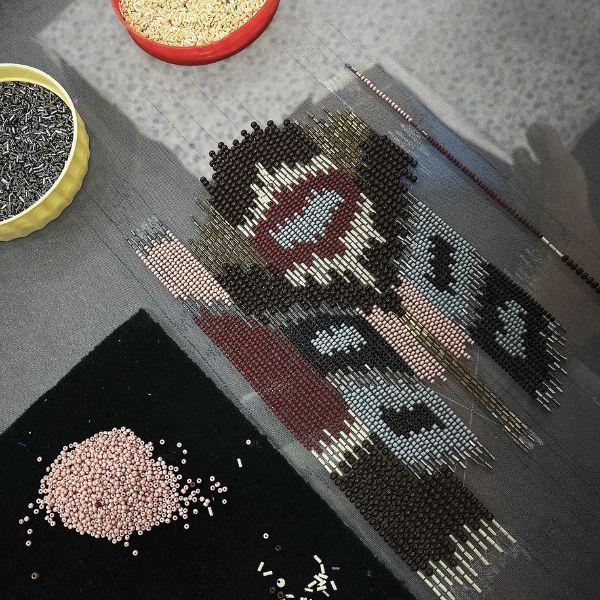
In fact, he wasn’t imagining a quintessential bride or groom as much as an atmosphere—an encounter between materiality and storytelling.
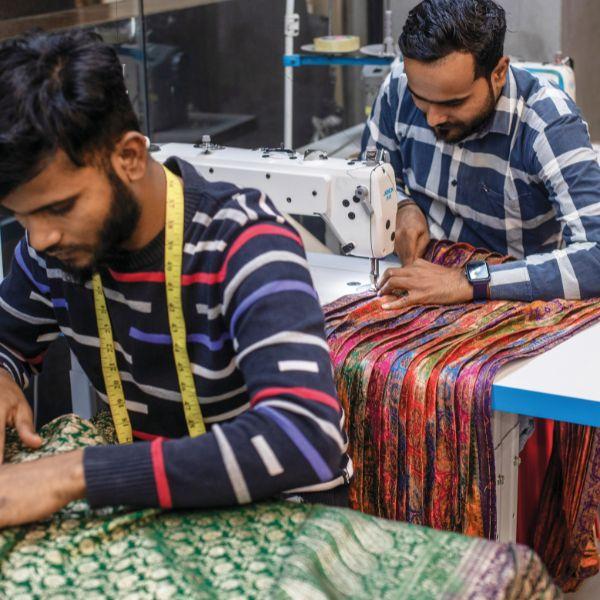
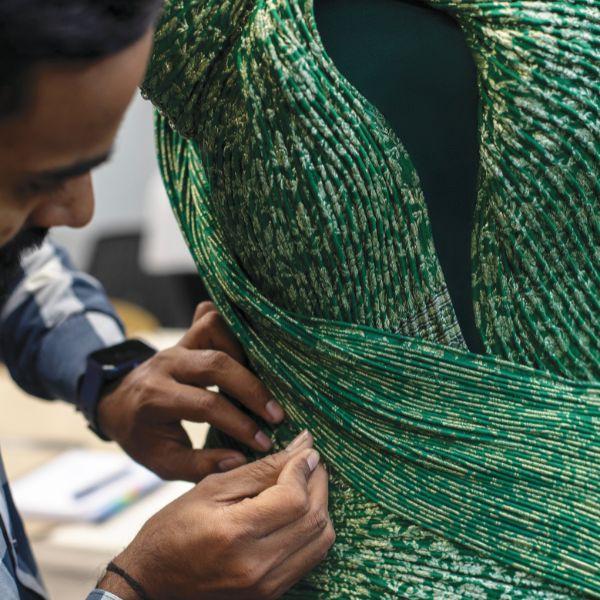
And contrary to the notion that Amit’s work is inherently futuristic, each garment is anchored in something far older. His woven polymer strands echo Victorian fluting. His engineered pleats borrow from age-old stiffening techniques once used for nobility. His revival of pre-owned Banarasi textiles—taboo in Indian bridal culture until he placed them unapologetically on the couture runway—is a reclamation of lineage, not a departure from it.
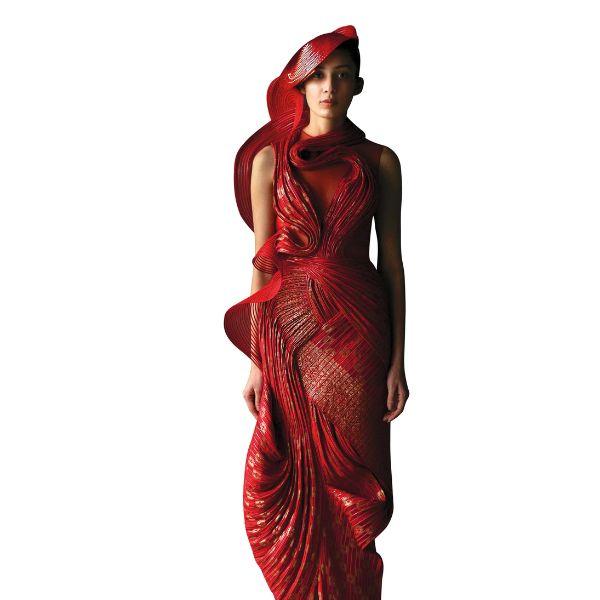
“These textiles had very little purpose anymore—reviving them gave them a new life,” says Amit, who, unlike many designers, resists the constant hunt for the next new material. “There’s too much wastage in searching for newness.” Instead, he prefers to deepen the vocabulary of materials that have already proved malleable, exploratory, and generous.
His next experiment involves weaving ikat using leftover dye yarns—an idea as slow as it is radical, unfolding over months, maybe years. Ask him what luxury means, and he will not mention rarity or ornamentation. He speaks, instead, of emotion and ease. “Luxury, today, is the emotion created out of thoughtful craft. Innovation matters, but it means nothing unless the piece moves you.”

An Amit Aggarwal lehenga weighs barely a kilo and a half. It needs no ironing. It folds like origami. It can survive a washing machine. This, he insists, is where couture must go—towards intelligence, not complication. Convenience, for him, is not a compromise but an ethos: “A product that makes your life easier is the new luxury—but without losing craftsmanship or your soul.”
This philosophy extends to consumption. We ask how someone who advocates buying less reconciles that with running a couture house. He smiles at the seemingly false contradiction. “It’s not about how many people you dress. It’s about how many times you can dress the same person.”

The metric of growth, in his eyes, is not scale, but trust. Post-pandemic, as global luxury consumption tightened, he found himself unexpectedly liberated. “People live in their purest version now. They’re confident and opinionated. And they no longer postpone pleasure.”
This shift aligned seamlessly with the brand’s longstanding language of individuality: more people started thinking like the brand. What fascinates him most, he explains, is not the hours logged in embroidery or handwork—though those remain monumental in couture—but the intellectual labour behind a garment. “Time is not just the hours spent making something. It’s years of thinking, failing, and rethinking. That thought process is the real value.”
Like the evolution of the iPhone, his analogy goes, innovation lies not merely in assembly but in ideation. His viewpoint on Indian craft reflects the same urgency.

“Ninety-nine percent of the conversation is about saving a craft,” he says. “But the real question should be: how do we evolve craft?” Preservation without progression amounts to stagnation. “A craftsman painting the same motif for 30 years is not survival—it’s a limitation.”
He is equally candid about the misplaced validation of Indian design through Western luxury houses. When Prada referenced the Kolhapuri chappal, the discourse exploded, but Amit was unmoved. “If you bought a Kolhapuri only after Prada showed it, you were never Indian.”
He notes, however, that young Indians today don’t wait for Western approval. “Homegrown labels don’t need runway validation anymore—they’re thriving on their own terms.”
“‘Made in India’ can’t be defined in a single sentence. India changes every 10 cm.” Despite operating in a hyper-noisy, hyper-digital landscape, Amit remains internally anchored. His method of disconnecting is startlingly simple. “I can retract into myself. I peel away layers and return to the centre of my being. The world I seek isn’t outside—it exists within me.”
No meditation, no ritual. Just instinct. His mirrors—his partner Ankit, his collaborator Sabina Chopra, and his family—form the emotional infrastructure of his life. “If you have one such person, you’re lucky. If you have two, you’re the luckiest,” he smiles.
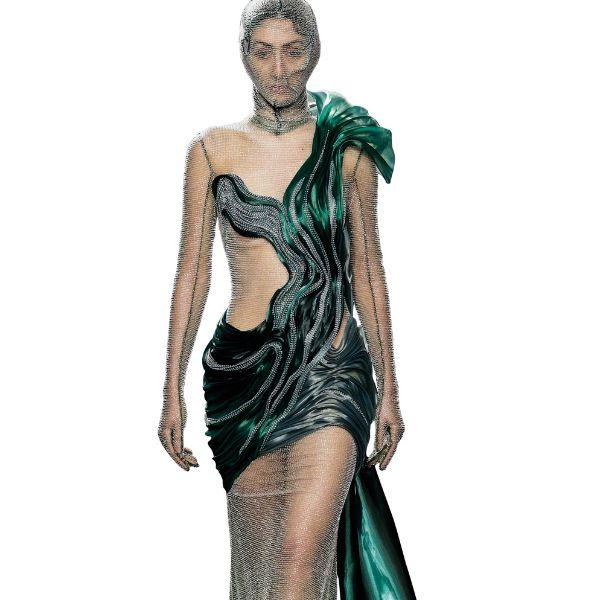
Looking ahead, Amit describes his brand as quiet—not slow, not hesitant, but deliberate. “We make necessary noise, not unnecessary noise.”
While quietness can often be mistaken for stagnation, the truth is the opposite. The next 15 years, he reveals, are crucial. He wants the label to evolve from being seen as a design house into a force that shapes both design and commerce. Major retail expansions are underway, alongside a significant new category to be announced early next year. “It’s an organic extension of our vision,” he says. “Not a surprise exactly—more an inevitability.”
As we end our conversation, we ask him for a secret—something for Brides Today readers. He doesn’t hesitate. “This isn’t my first life as a creator,” he says. “I’ve been making clothes long before this body. And I know I’ll continue long after.”
A reincarnated couturier—it sounds exactly like something Amit Aggarwal would say. Not mystical, not dramatic. Simply, inevitably, true.
Images courtesy Amit Aggarwal
This article first appeared in the March 2026 issue of Brides Today India
Also read: Ancient wisdom, modern bottles: The rise of Ayurveda in global bridal beauty routines
Also read: Fun low-effort bachelorette party ideas for brides who dislike the fuss
.......Advertisement....

Celebrating your first Karva Chauth? Here's everything to know
Ahead, a simple guide to the rituals, traditions, and little details to know before the day.
Should brides include micro-needling in their skincare prep?
A dermatologist-backed guide to understanding how microneedling works, when to schedule it before your wedding, and what brides should know before adding it to their pre-wedding skincare routine.
