Maria Grazia Chiuri's Latest Couture Collection For Dior Is For Unconventional Brides
The first female artistic director of the legendary fashion house seamlessly wove a surrealistic tale of high fashion for her latest haute couture outing.


It’s only been a year since Maria Grazia Chiuri, the former co-creative director of Valentino, came to helm Dior. And her impact on the 70-year-old fashion house has been nothing short of transformational. Under her direction, the Dior catwalk has seen an ongoing dialogue between fashion, art, and feminism. Being the first female creative director of the house, she coins the term fashion as a ‘responsibility’, a responsibility to uplift every designer, model, and seamstress, and every woman around the world. Since its inception, Christian Dior has been synonymous with dainty and feminine silhouettes.

When the designer debuted his first collection in 1974, the world was emerging from a period of war, of tough uniforms, and female soldiers. He created a new look featuring fuller busts, light taffeta, soft shoulders, and skirts in full bloom—a sliver of light in a dark time. Fast-forward 70 years, in the light of the #MeToo and the Time’s Up campaign, Chiuri’s designs, much like Monsieur Dior are in sync with the needs of the current woman. Correspondingly, the brand’s haute couture 2018 offering touched upon subject like Surrealism and the dreams of women.
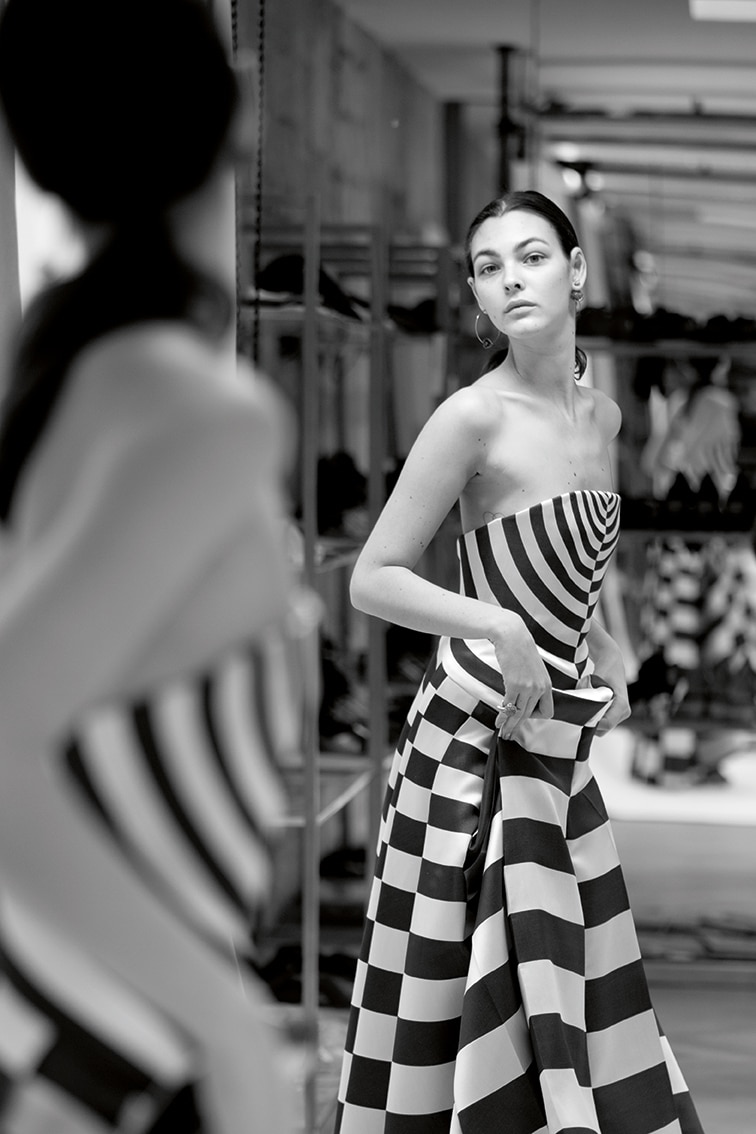
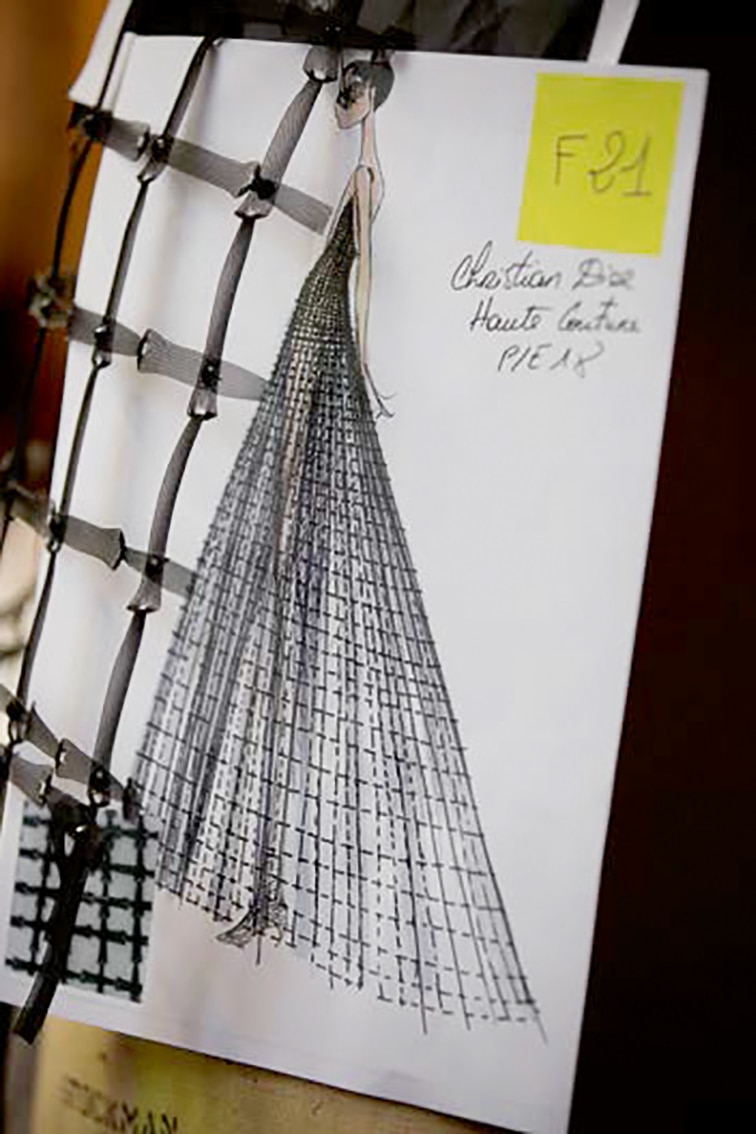
Within the vast expanse of Musée Rodin, the show area was transformed into a gallery with huge white body-part sculptures—torso, eye, and ear—hung from the mirrored ceiling, and the runway transformed into a black-and -white checkerboard floor as anecdotes borrowed from the 20th-century art movement. “The history of haute couture is intimately linked with the history of modern art. The couturier is an artist unto himself and the word ‘atelier’ designates equally the studio of an artist or that of a designer,” muses Chiuri in her show-notes, speaking of Surrealism as the primary inspiration. For the collection, Maria Grazia Chiuri traced the history of Dior, not so much the design archives but the man who surrounded himself with artists such as Cocteau, Dalí, Schiaparelli, and Fini. The latter, an Italian-Argentine artist had worked with Dior in the 1930s.

Chiuri, who was particularly smitten by Fini’s work opened the show with a quote made by the artist that read, “Only the inevitable theatricality of my life interests me.” Leonor Fini, in pre-war Paris, wore flamboyant headdresses and extravagant clothes to create an image of power. “She was the incarnation of the then-revolutionary idea that one must always remain independent and reinvent oneself as a representation of all possible realities,” as Chiuri describes her. However, Chiuri took a more understated approach in its acknowledgement. At times the illusion was subtle, like a fishnet stocking slipped over the top of a shoe or the neckline of a dress in fact comprising elbow-length silk globes. The collection largely, in black and white with a sparkle of silver here and there acted as the ‘colours of the subconscious,’ as Chiuri described it.
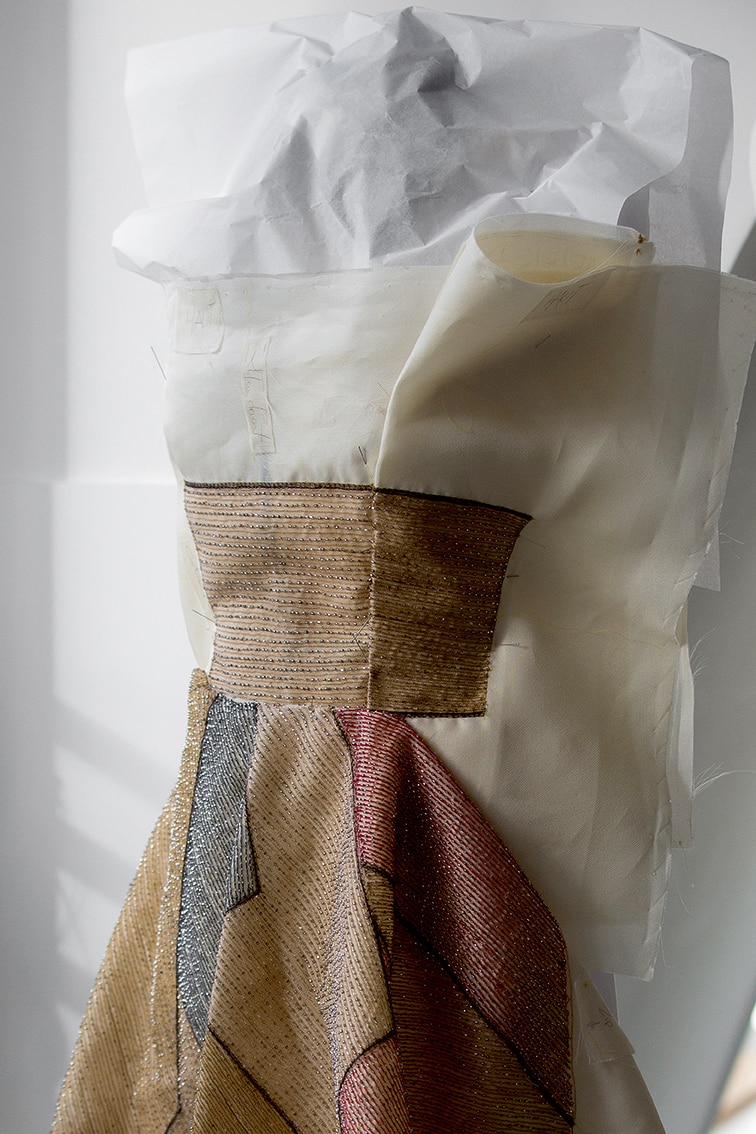
The collection has inklings of Surrealism-based illusion, twists, and play on words. One can see princess coats with a domino effect in which all are fully-faced, much like a game or gowns where the pleats and lines have been manipulated for optical effect. The most important dress, Chiuri said in an interview, was the ‘Basket Dress’ from 1957 reinterpreted as a cage, a surrealistic element in see-through hooped ‘cage’ corsets individually strung by hand, symbolic of women freeing themselves. To offset the achromatic colour scheme was one dress covered in glittering eyes, painstakingly beaded by the craftsmen, or the ‘nude dress’ made by the brand in their ateliers in Vermont, whose sequins render a nude woman in trompe-l’œil inspired by the likes of Man Ray’s solarised portrait studies. Apart from dresses, the maison also showcased impeccably-tailored Bar Jackets, tailored coatdresses, and dramatic cloaks paired with tuxedos.
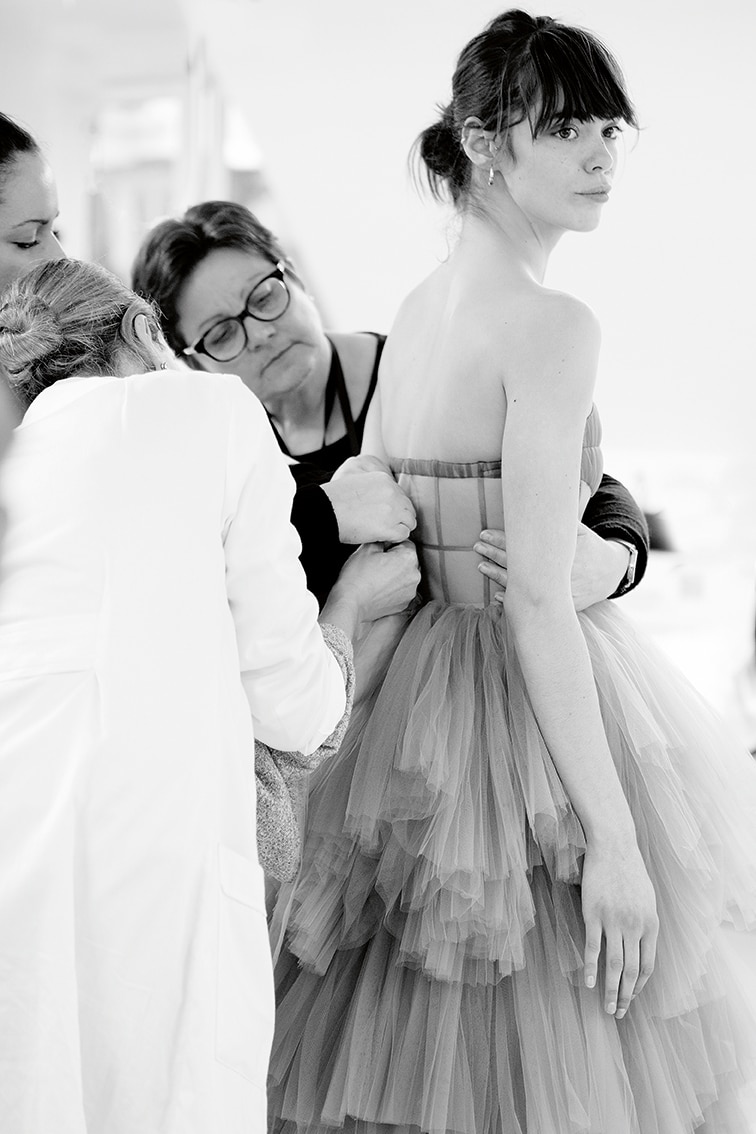
Diaphanous layers of black tulle and silvery fishnet material were offset by heavy, luxurious velvet, as part of what proved to be a characteristically dreamy collection. The evocative masks adorned by the models were created by milliner Stephen Jones as a homage to Peggy Guggenheim, who exhibited Fini in her 1943 show. Chiuri said, “The masks were not for hiding, but for revealing oneself.” The symbolism also lent itself through stencils of the words Il ne s’agit pas de comprendre mais de croire translating into “It’s not about understanding but believing” and Imaginaire c’est ce qui tend à devenir rèel or “Imaginary is what tends to become real” borrowed from Andre Breton’s Surrealist Manifesto. Chiuri said that Leonor Fini loved the Surrealists’ masked balls, “but she went to represent herself, not to dance, because she believed the mask you chose revealed who you were.”
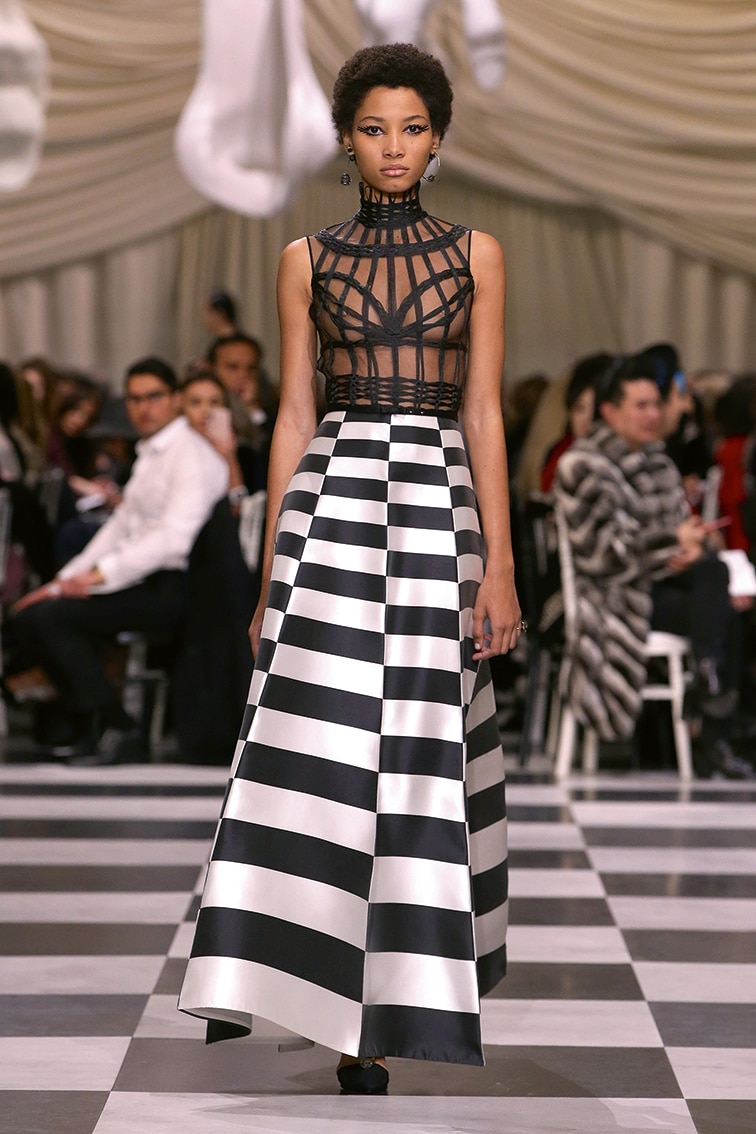
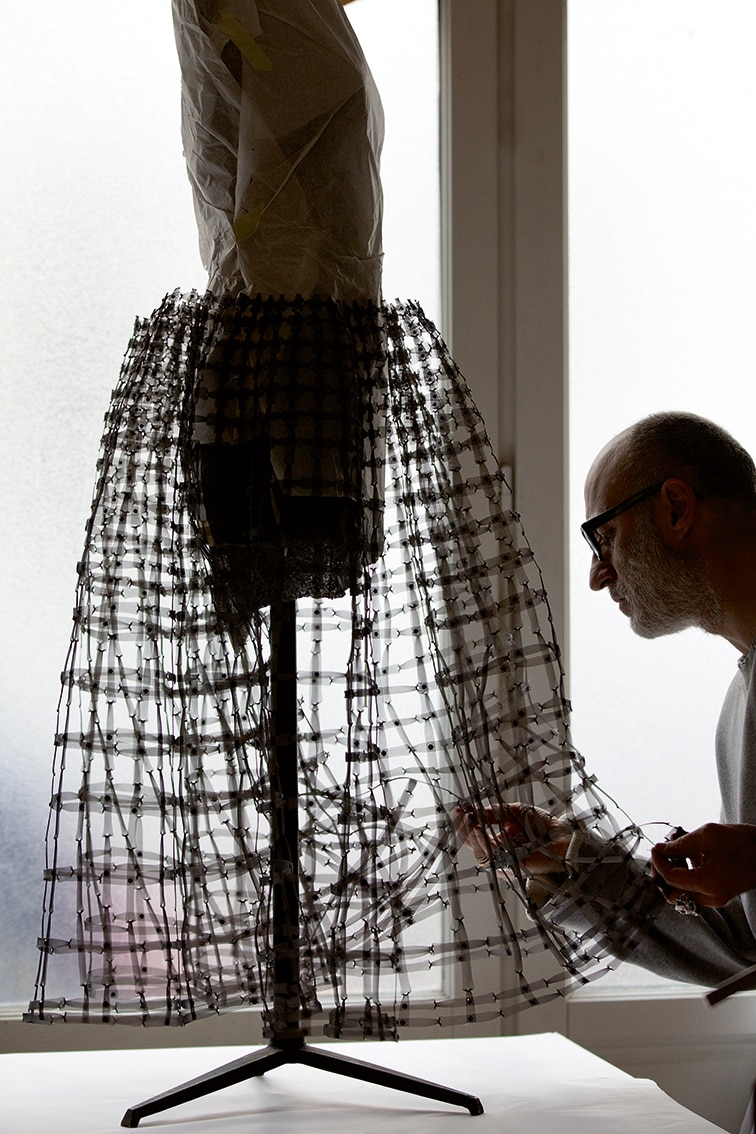
In stride with that theory, Dior organised a masked ball like no other, and the BRIDES TODAY team was in attendance. Inside, the plaster casts of body parts that had been suspended from the ceiling for the show were still there, and champagne accompanied edible fondant shaped like Magritte-inspired apples or scarlet dice. All around were go-go girls in playing-card tutus, and a hostess worked the room with a lit candelabrum balanced on her head. The eccentricity of the night would have been well-appreciated by Leonor Fini. Maria Grazia Chiuri’s haute couture offering was in lieu with her stance on women’s bodies and has put Christian Dior in a favourable position where politicising of brands are concerned. From Linda Nochlin to Leonor Fini, it’s interesting to see the female protagonists that play a pivotal role in shaping Chiuri’s designs season after season. After all, the world is in desperate need of a hero and it’s high time that it’s a woman.
All images: Courtesy.
Assisted by Dishari Basu.
.......Advertisement....

The art of cinching: Why minimalistic waist chains are back in bridal focus
This accessory is redefining bridal styling with sartorial focus.
Fun low-effort bachelorette party ideas for brides who dislike the fuss
No matching outfits or chaos, just cosy nights, nostalgic moments, and plans that feel like a holiday.
